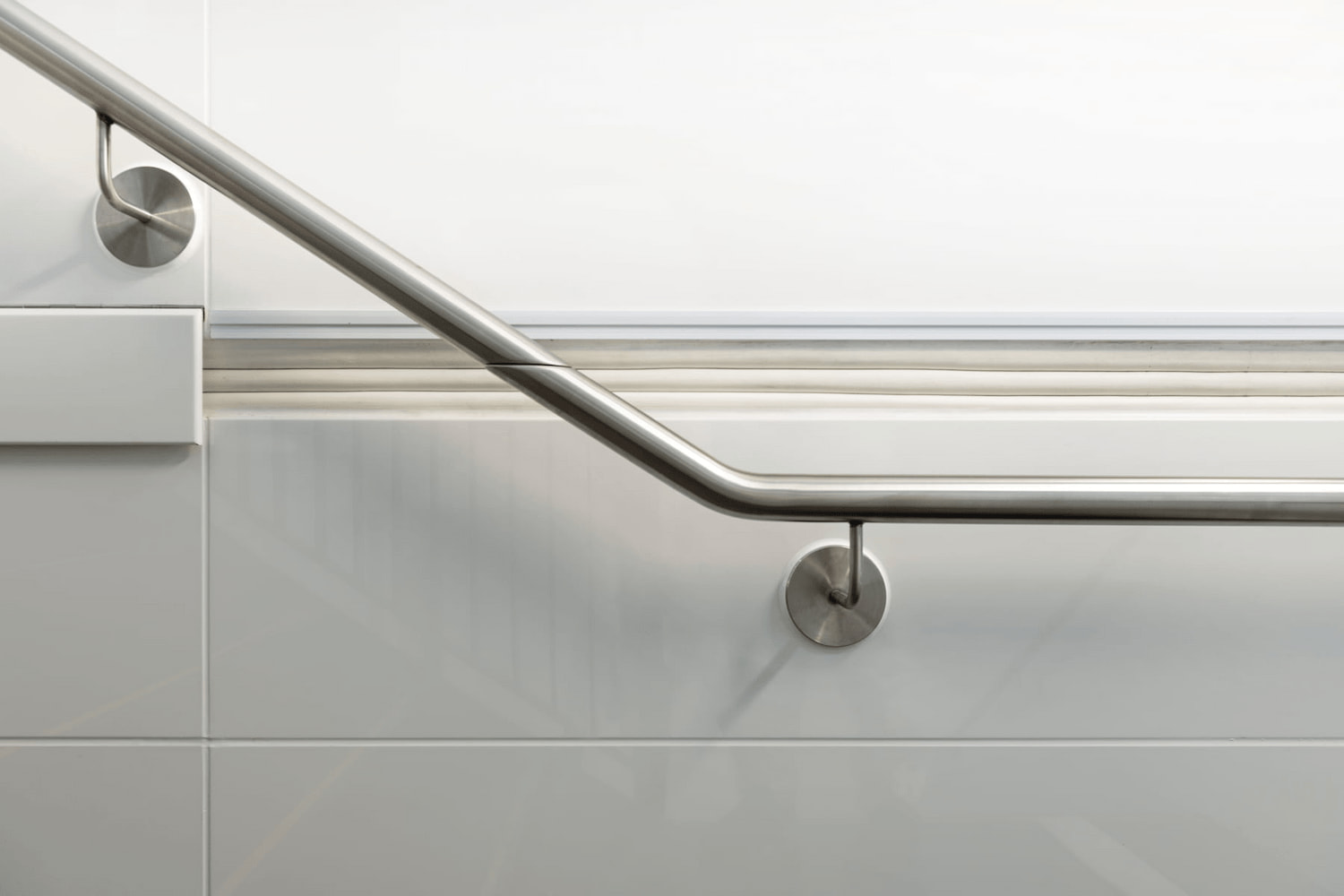
Arcoplast Acryloyl : Engineered polymer wall paneling system, interfaces with a seismic expansion joint | PC3 Laboratory
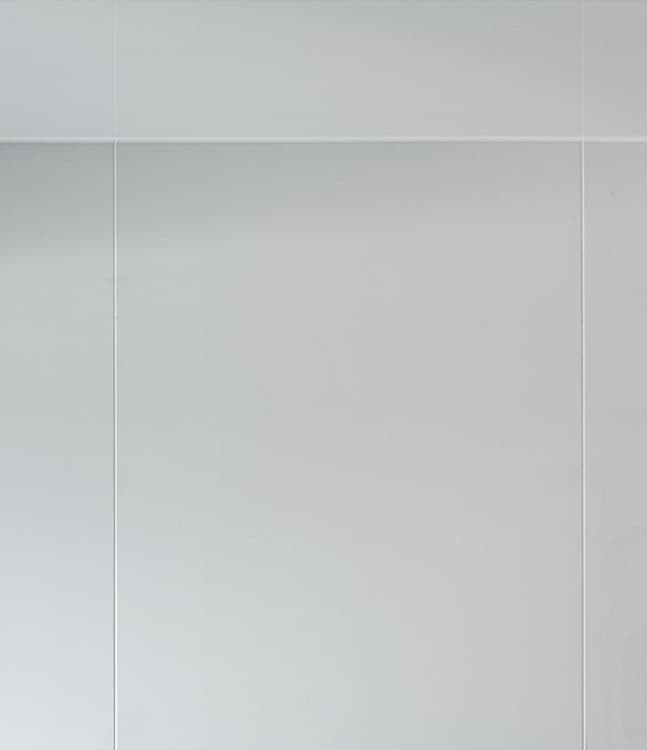
ACRYLOYL PANELS : Acryloyl panels are all made from the same isotropic solid core, impermeable, fully submersible composite, the finished panels are chemically neutral, certified Living Building Challenge Declare Label 3.1. and HPDC award.
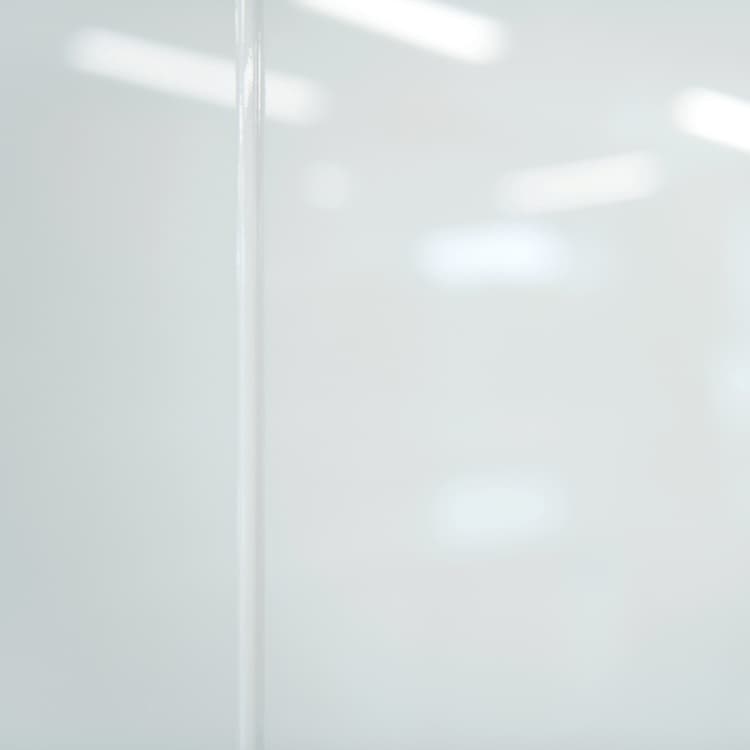
Acryloyl is the most diverse, economically viable primary barrier system in the Arcoplast range. A1010 Bio-Seal and A-2020 are used in different capacities to chemically weld the Acryloyl panels together to form a seamless single membrane primary barrier. An interesting aspect of the surface is the light reflective value : 99.8% @ 85º source angle. A&E design teams exploit this feature to specify fewer light fixtures, thus fewer penetrations.
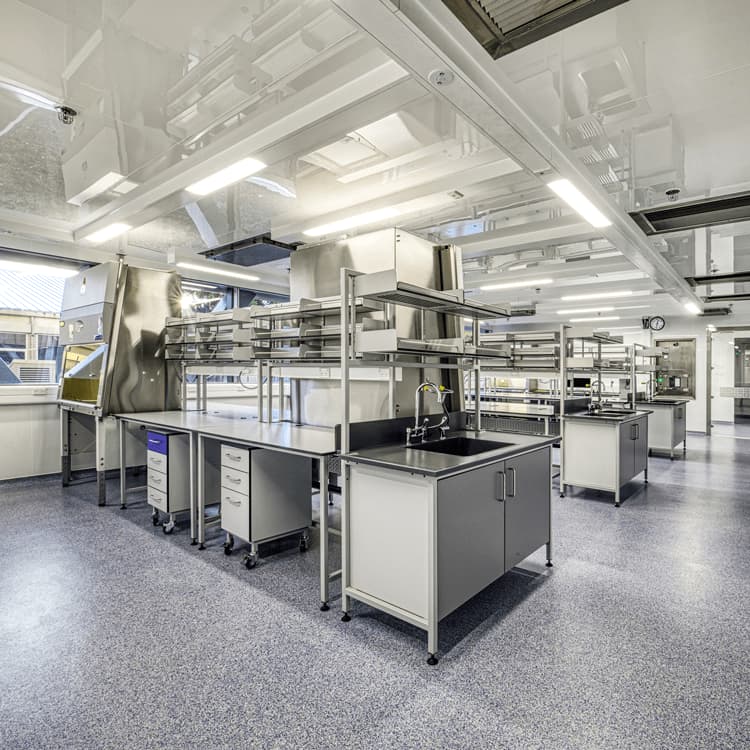
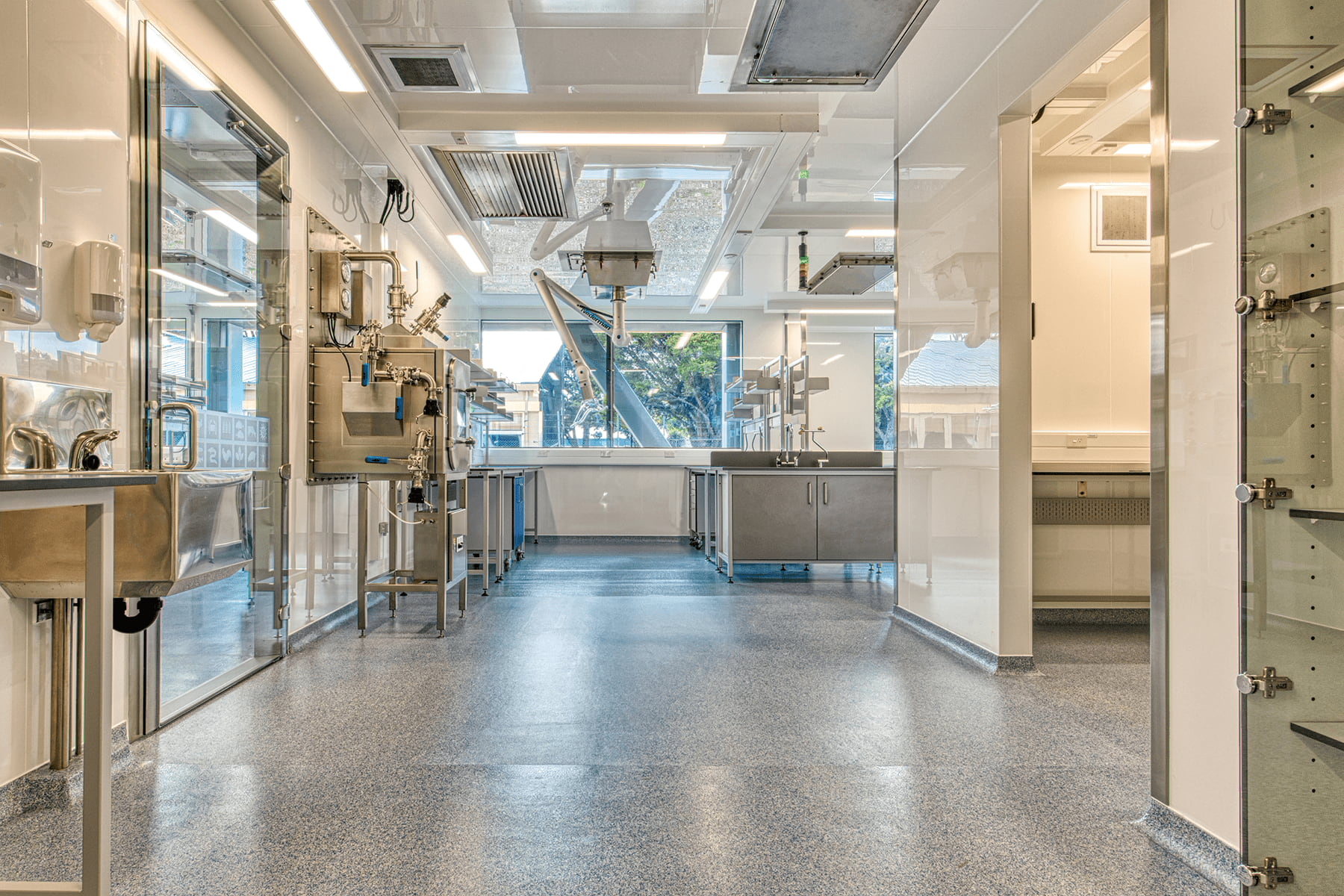
Acryloyl panels have a working history of excellence across a wide range of industries, notably : Controlled environments, cleanrooms, Biosecurity/ Biosafety laboratories, Science Research facilities, Healthcare, Pharmaceutical production, Vivariums, Food & Beverage plants and other related industries.
ACRYLOYL : WALL & CEILING SYSTEMS
FIRE and SMOKE
A-1010 Bio-Seal : Infill joint. Easy to clean, impermeable, antimicrobial, does not support the growth of fungus, mildew, mold or bacteria.
A-1010 Bio-Seal three and one, adhesive sealant finishing compound.
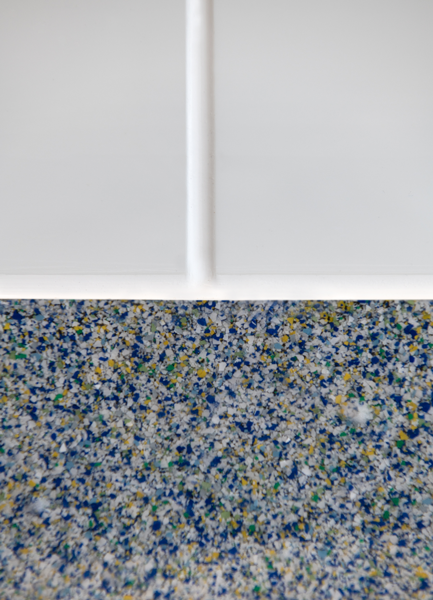
The seamless air water tight joint, between two wall panels and the coved floor surface was created in a single application using A-1010 Bio-Seal finishing compound.
Insitu in a single application A-1010 Bio-Seal, seals and finishes Acryloyl panels into a continuous single membrane primary barrier, by chemically welding the panels together.
APPLICATIONS
Science is always pushing the boundaries resulting in constant change. Cleanrooms now must facilitate a wide dynamic of applications within demanding environments suited to purpose, and in many cases multiple purposes. To date, the monolith construction of a room inside a room has proven to be the most effective system for cleanrooms and high containment laboratories. Arcoplast have taken this further by creating seamless penetrations and seamless panel joints to form a system of, monolith Seamless Single Membrane Primary Barriers.
Acryloyl Seamless Single Membrane Primary Barriers are available as Dedicated or Hybrid systems. Both systems have their advantages when designing Primary Barriers for various applications and working environments, bringing into play possibilities and outcomes that alter current thinking and the design of Primary Barriers.
DEDICATED :
Using only one type of panel system to create a Primary Barrier.
Acryloyl dedicated primary barriers are isotropic, chemically neutral, fully submersible and the most cost-effective Arcoplast primary barrier system.
HYBRID :
Using a combination of Arcoplast panel systems to form a range of different types of Primary Barrier.
Acryloyl, GFRP hybrid primary barriers are commonly installed in cleanrooms where heavy traffic is a concern. Typically in these scenarios, GFRP is installed along the lower wall areas where potential contact is likely to occur.
MANUFACTURING PROCESS :
Acryloyl is an engineered compressive virgin polymer glass fiber, solid core composite, produced into an isotropic high density rigid, flat sheet panel. Available in most PMS colors, standard color is Pristine White. The panels are polished to a satin or high gloss finish. Acryloyl is translucent and has excellent light reflective qualities. Specular gloss tested at 85º : ASTM D 523 = 97.5%. Feedback from lab staff relating to luminance. " The Acryloyl primary barrier allows for quick visual inspection; when cleaning a spill the effected surface is easy to identify and sterilize. "
Hygiene :
Does not support microbial activity, bacteria, mildew, or fungus.
Panel Color :
Available in most pantone (PMS) colors. Standard color is pristine white.
Structural Integrity :
Rigid, impermeable, resilient to corrosion, does not blister, delaminate, shrink, flake or peel. Acryloyl primary barriers have a long life cycle and no rejuvenating maintenance programs, minimizing downtime and interruptions, equating to a favorable return on investment.
MICROORGANISM TESTS : ACRYLOYL PANELS
| Arcoplast Wall and Ceiling Systems | Test : ISO 846 |
|---|---|
|
SCOPE : International Standard ISO 846 is used to determine the deterioration of plastics due to action microorganisms. |
|
|
CONCLUSION : Resist to fungi and bacteria, does not support microbial growth. Results obtained conclude, test sample does not provide any nutrition for bacteria and fungi. Acryloyl panel surfaces (face and back side) resist fungi and bacteria and does not support microbial growth. |
|
| Arcoplast Wall and Ceiling Systems | Test: ASTM D3273-00 |
|---|---|
|
SCOPE : To test the resistance of test samples to mold growth. |
|
|
CONCLUSION : Products tested were effective in preventing fungal growth, were found to be resistant to fungi tested. Acryloyl panel surfaces (face and back side) were effective in preventing fungal growth. All samples had an ASTM D3273 rating of 10. |
|
| Arcoplast Wall and Ceiling Systems | Test: ASTM D3274-09 |
|---|---|
|
CONCLUSION : Products tested showed 0% coverage of fungal growth. All samples had ASTM D3274 rating of 10. |
|
CLEANING DECON SANITATION
Acryloyl Seamless Single Membrane Primary Barriers have an impressive perm rate of 0.05, coupled with an ultra smooth topography of 0.020 μm, resulting in : Acryloyl panel surfaces, seamless joints and penetrations are less susceptible to micro organisms.

SURFACE TOPOGRAPHY :
The largest surface area inside a cleanroom is the primary barrier.
Primary barriers with ultra-smooth surfaces having an Ra* of 0.8μm or less, mitigate the risk of contamination due to minimal microbial attachment resulting in more efficient cleaning, decon, sterilization.
The international standard for hygienic design ISO 4287.23 stipulates the topography and roughness of a surface is : Ra* 0.82μm or less. It is commonly understood most forms of bacteria thrive in a sessile state by bonding to a surface using one of four different methods : attachment, adherence, adhesion or entrapment. It is also noted the rougher the surface the stronger the attachment force.
As an example : Sessile cells protected in a Biofilm made up of extracellular polymeric substances are less likely to be a risk when a primary barriers surface is Ra* 0.8μm or less.
For these test results the Ra* master test micrometer reading was set at 0.40 Micrometer symbol : μm.
Micrometer / Micron, is a metric unit of measure for a length equal to 0.001 mm, or about 0.000039 inch
| Surface Topography |
Acryloyl |
GFRMC |
GFRP |
|---|---|---|---|
Ra* : Roughness Average |
0.020 μm |
0.01 μm |
0.082 μm |
Rq : Roughness, root mean square average |
0.03 μm |
0.02 μm |
0.135 μm |
Rz : Average Maximum Height of the Profile |
0.16 μm |
0.013 μm |
0.817 μm |
Rp : Maximum Profile Peak Height |
0.09 μm |
0.07 μm |
0.604 μm |
Rv : Maximum Profile Valley Depth |
0.07 μm |
0.06 μm |
0.213 μm |
Rt : Maximum Height of the Profile |
0.21 μm |
0.18 μm |
2.384 μm |
COMPLIANCE



| ACRYLOYL : DEDICATED BARRIER | USP 797-800. CL2, CL3. BSL-2, BSL-3, ABSL-3, BSL-3Ag, BSL-4. PC2, PC3, PC4 |
| ACRYLOYL - GFRP : HYBRID BARRIER | USP 797-800. CL2, CL3. BSL-2, BSL-3, ABSL-3, BSL-3Ag, BSL-4. PC2, PC3, PC4 |
| ACRYLOYL - GFRMC : HYBRID BARRIER | USP 797-800. CL2, CL3. BSL-2, BSL-3, ABSL-3, BSL-3Ag. PC2, PC3 |
| Dust Particulates ISO Test | Compliant |
| Full scale room fire test: ISO 9705 Annex B | Pass |
| Seismic category | A, B, C, D, E, F |
| Seismic: Shear strength lateral movement – Corner section assembly | Acryloyl 12.5mm: Test result 791 lbf |
| US and International building standards | Compliant |
| VOC: GC-MS Test | No VOCs detected |
Arcoplast primary barriers are void of VOCs, and thus facilitates a clean neutral environment for people, animals and occupants.
Click for more information
 Please note : the VAULT takes a few seconds to open
ACRYLOYL 12.5MM PANEL KERF
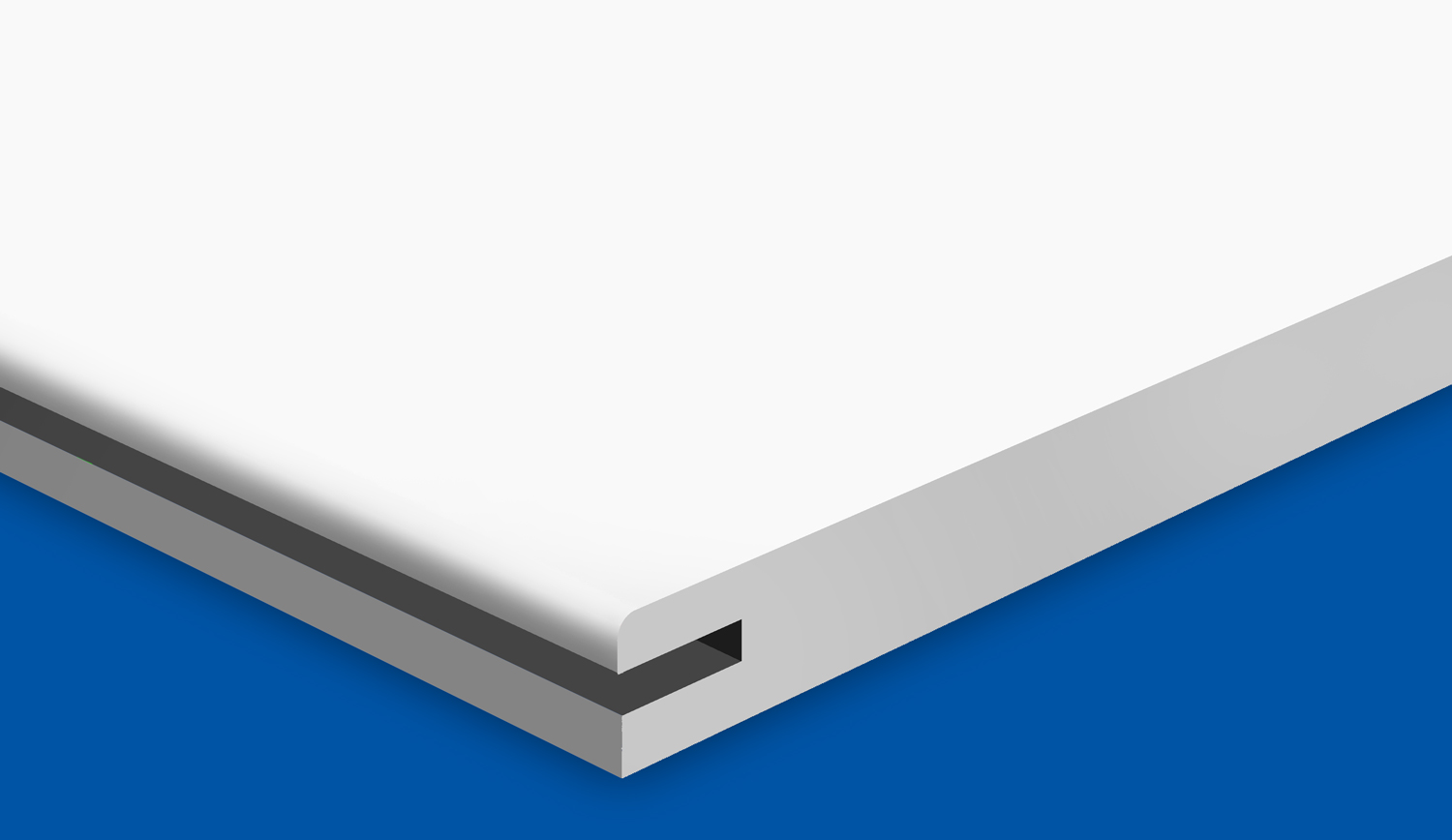
Acryloyl Surface : High gloss or satin finish, available in most PMS colors, Acryloyl standard color is Pristine White.
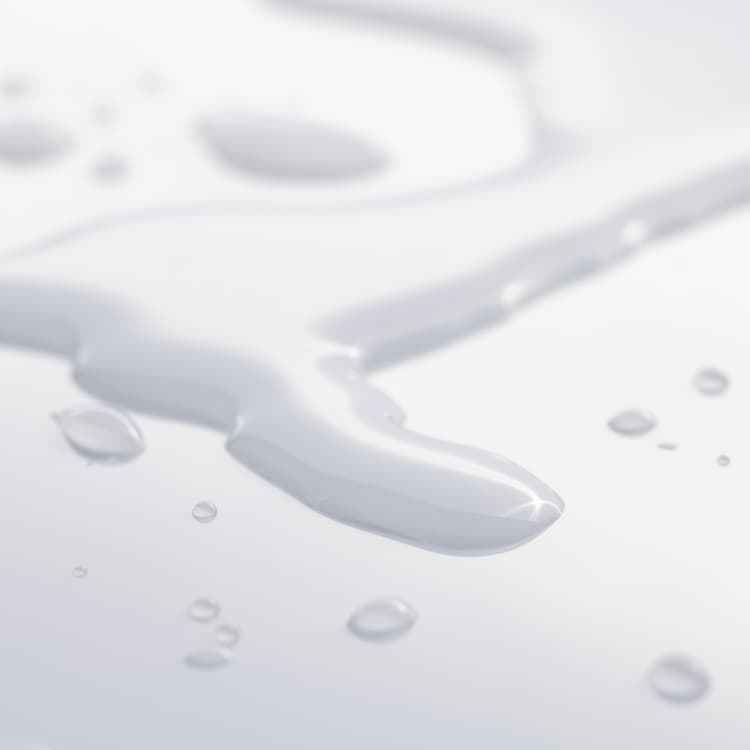
Acryloyl Single Membrane Primary Barriers are impermeable, antimicrobial and very efficient to clean due to the topography of the surface. Acryloyl does not support the growth of fungus, mildew, mold or bacteria.
Acryloyl barriers have a long lifecycle, they do not corrode, oxidize, flack, delaminate or blister over time and there are no rejuvenating maintenance programs. In the event of accidental damage the barrier is able to be repaired in situ as new.
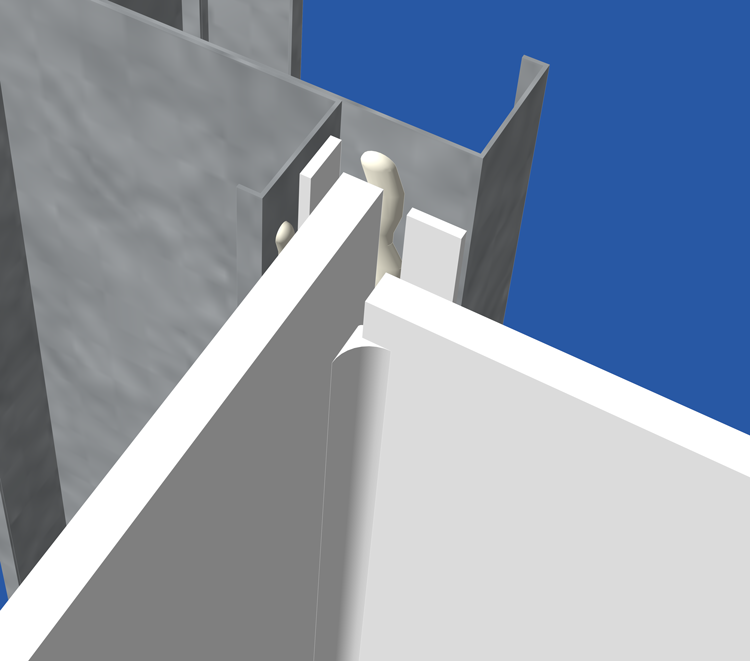
CORNER ASSEMBLY : A-1010, A-2020
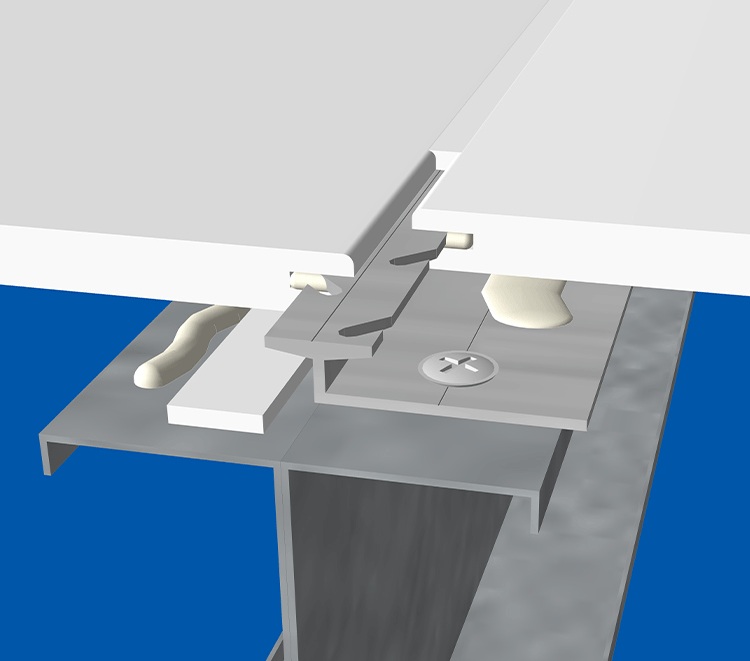
SEISMIC WALL SPLINE ASSEMBLY : A-1010, A-2020
INSTALLATION. Brief Overview
Most Acryloyl wall and ceiling installations do not require pre-engineering procedures. The panels are installed using a dry construction method, eliminating the need for extensive on-site preparations such as sanding, painting, surface coatings and protracted drying times. The advantages of dry construction : The ready to install Arcoplast panels have no trapped contaminates from on-site preparations. A small well trained crew can install the primary barrier to the highest level of containment, quickly and efficiently, creating minimal dust and waste.
Acryloyl Back Plate Lining System :
Panel thickness : 6.5mm • 9.5mm • 12.5mm
Repurposing or Modernizing a facility is a quick clean process. The Acryloyl panels and back plates are directly attached using A-2020 structural adhesive, the joints and seams are sealed and finished using A-1010 Bio-Seal. Please note : Before direct attaching back plates and panels to any surface, make sure the surface is clean and able to support the new panels.
*Fasteners are used to fix the back plate or spline to the substrate/ framing. Fasteners do not penetrate the barrier surface.
Acryloyl Spline System :
Panel thickness : 9.5mm • 12.5mm • 19mm
Acryloyl corner and wall seismic or non seismic splines, locate the Acryloyl panels into the correct position using *fasteners and VHB tape. A-2020 structural adhesive bonds the panels and spline assembly to the framing. A-1010 Bio-Seal is used to seal and finish panel joints, resulting in a seamless single membrane primary barrier.
Direct attach :
Directly attaching fixtures and MEP devices to the Primary Barrier is achieved using A-2020 adhesive and A-1010 Bio-Seal aided with fasteners and brackets as required. Please note once fixed to the wall, it is impossible to remove the fixture without cutting the panel.
Penetrations :
When penetrating an Acryloyl Primary Barrier, A-1010 Bio-Seal three in one adhesive sealant finishing compound is used to create an air, water tight seamless seal in and around the penetration.
Repair :
In the event of accidental damage, the Acryloyl Primary Barrier is able to be repaired in situ back to new.
Note : Arcoplast is not a domestic product. All Arcoplast installations are to be carried out by trained experienced trades people.
CONCLUSION
Sustainable materials, longevity, and low maintenance are the future of construction. Acryloyl Primary Barriers are chemically neutral, impermeable, and resistant to bacterial and fungal growth.
Acryloyl is the most economical primary barrier in the Arcoplast range, it is efficient to clean, decon, and sanitize, it has a long lifecycle and no rejuvenating maintenance programs. For these and many other reasons, Acryloyl is the basis of design, and not limited to the following industries : Life Sciences, Pharmaceuticals, Biosafety, Healthcare, Vivariums, and the Food & Beverage industry.
ACRYLOYL VAULT. The vault takes several seconds to open